How to Jump-Start a Car Safely: A Step-by-Step Guide.
A dead battery can strike at the worst possible moment, which is exactly why knowing how to jump a car is such a valuable skill for every driver. Whether you left your headlights on overnight or your battery has simply reached the end of its life, jump-starting a vehicle is usually quick and straightforward once you understand the correct process. In this guide, we will explain how to jump a car safely, step by step, so you can get back on the road with confidence and without damaging either vehicle's electrical system.
Why It's Important to Do This Correctly
Before getting into the steps, it is worth understanding why proper technique matters so much here. Connecting jumper cables in the wrong order can cause sparks, damage sensitive electronics, or in rare cases, even cause a battery to explode. Additionally, modern vehicles often contain delicate onboard computers that are more sensitive to electrical surges than older cars. As a result, following the correct sequence is not just a suggestion; it is essential for protecting both your vehicle and yourself.
What You Will Need
To jump a car safely, you will need the following:
● A set of jumper cables
● A second vehicle with a healthy, charged battery
● Safety gloves and glasses (recommended)
● Your owner's manual, in case your vehicle has specific jump-starting instructions
Because some hybrid and electric vehicles have unique jump-starting procedures, always check your manual first if you are unsure.
Step 1: Position the Vehicles
Park the working vehicle close to the dead one, ideally close enough that the jumper cables can comfortably reach both batteries, but without the vehicles touching. Turn off both engines and engage the parking brakes before proceeding any further.
Step 2: Locate Both Batteries
Open the hoods of both vehicles and locate the batteries. In most cars, the battery sits near the front of the engine bay, though some vehicles place it in the trunk or under a seat, in which case there is often a dedicated jump-start terminal under the hood instead. Consult your manual if you cannot locate it easily.
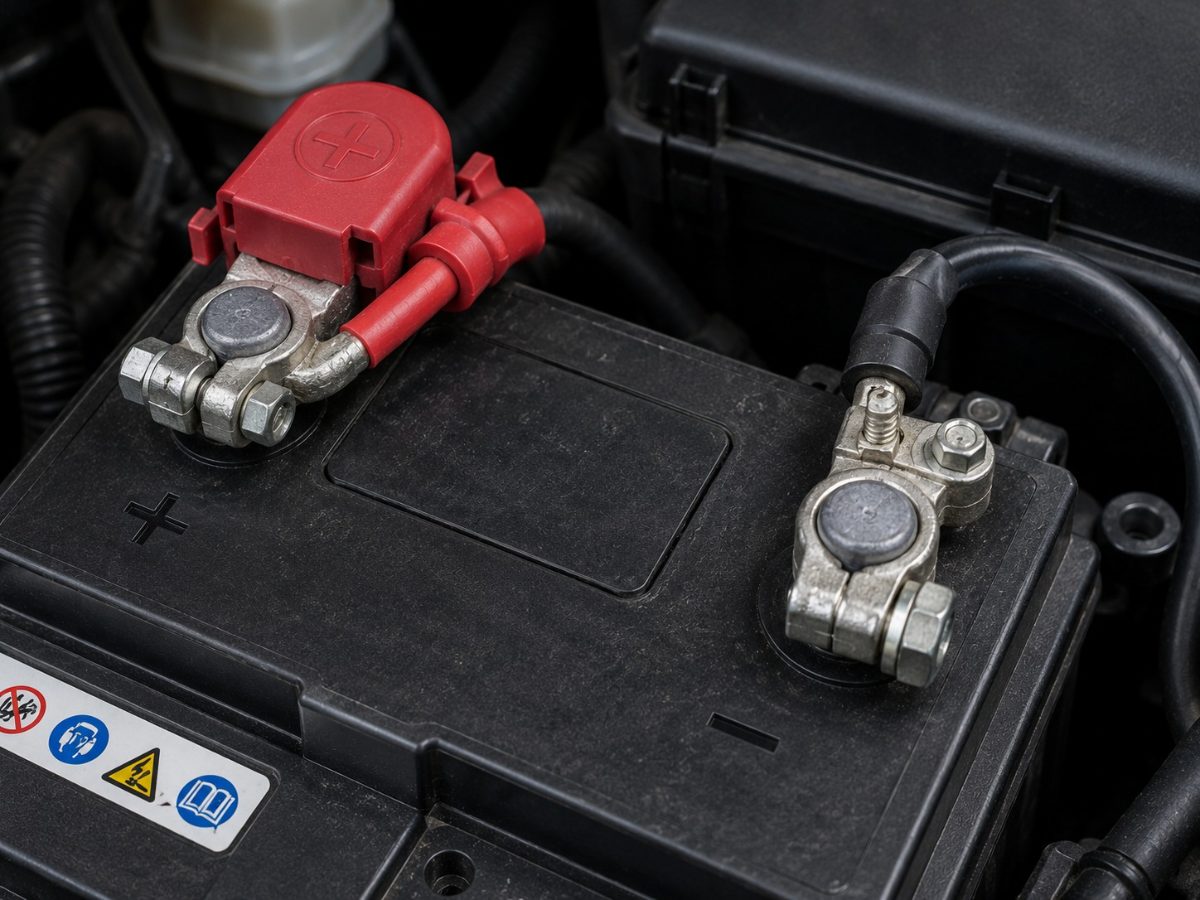
Step 3: Identify the Positive and Negative Terminals
Each battery has two terminals: positive, marked with a plus sign and usually covered by a red cap, and negative, marked with a minus sign. Correctly identifying these is critical, since connecting cables incorrectly can cause serious damage or injury.
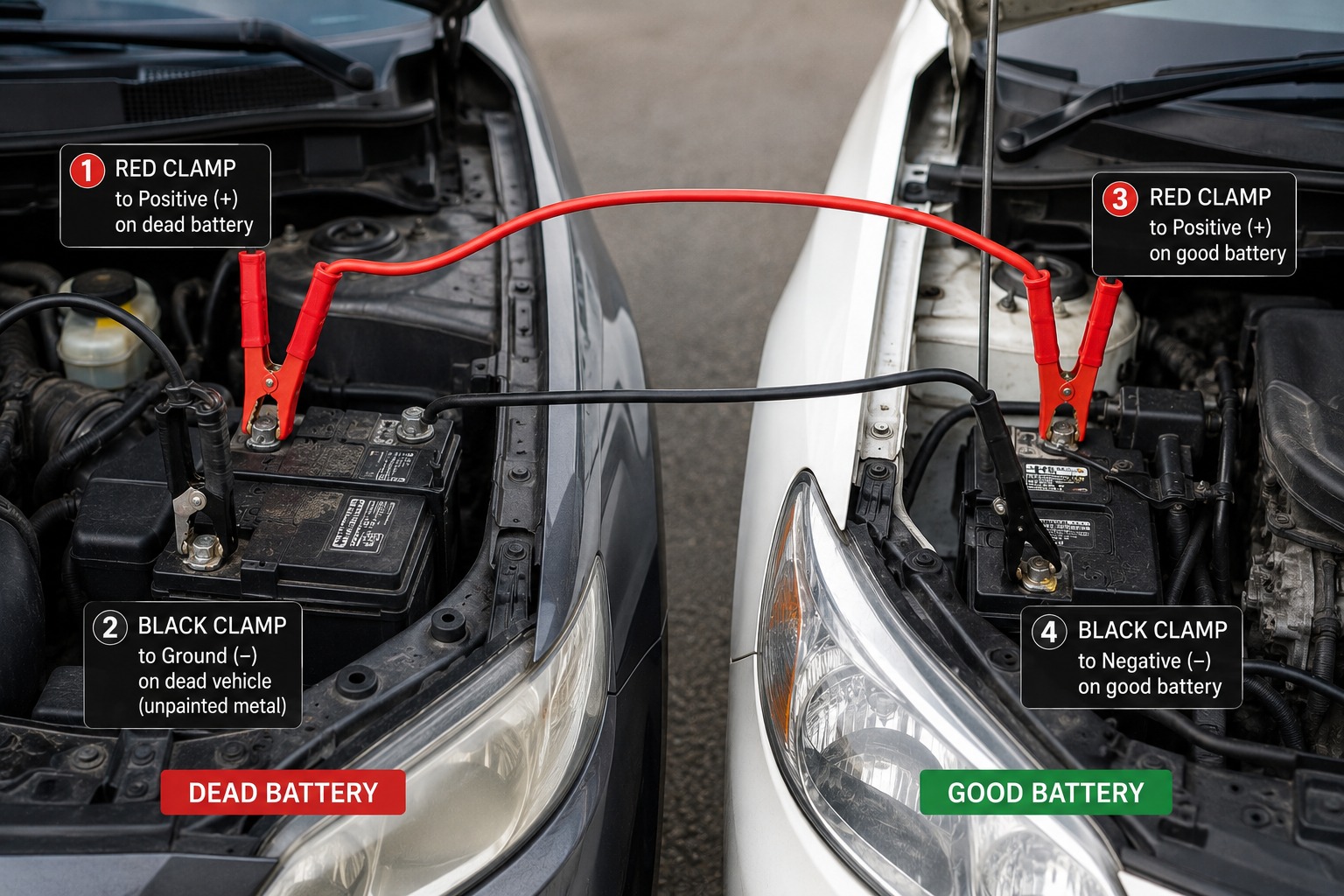
Step 4: Connect the Jumper Cables in the Correct Order
This is the most important part of learning how to jump a car, since the order matters significantly for safety:
● Attach one red clamp to the positive terminal of the dead battery.
● Attach the other red clamp to the positive terminal of the working battery.
● Attach one black clamp to the negative terminal of the working battery.
● Attach the final black clamp to an unpainted metal surface on the dead vehicle, away from the battery, such as a metal bracket or bolt. This acts as a ground connection and helps prevent sparks near the battery itself.
 Step 5: Start the Working Vehicle
With the cables properly connected, start the engine of the working vehicle and let it run for a few minutes. This allows some charge to transfer into the dead battery before you attempt to start the second vehicle.
Step 6: Start the Dead Vehicle
Next, attempt to start the vehicle with the dead battery. If it starts successfully, let both vehicles run for several minutes to allow the battery to build up additional charge. If it does not start on the first attempt, wait a few minutes and try again, since sometimes a little extra charging time is needed.
Step 7: Disconnect the Cables in Reverse Order
Once the previously dead vehicle is running, disconnect the cables in the exact reverse order they were attached:
● Remove the black clamp from the unpainted metal surface.
● Remove the black clamp from the working battery's negative terminal.
● Remove the red clamp from the working battery's positive terminal.
● Remove the red clamp from the previously dead battery's positive terminal.
Following this reverse sequence helps minimise the risk of sparks during disconnection.
Step 8: Keep the Revived Vehicle Running
After a successful jump, drive the vehicle for at least fifteen to twenty minutes, or let it idle for a similar period, to allow the alternator to recharge the battery further. If the battery dies again shortly after, this often indicates a deeper issue, such as an old battery that needs replacement or a charging system problem that a mechanic should inspect.
Safety Tips to Keep in Mind
Whenever you jump-start a vehicle, keep these safety points in mind. Never let the red and black clamps touch each other while connected to a battery, since this can cause a dangerous short circuit. Additionally, avoid leaning directly over the battery while connecting cables, since batteries can occasionally emit sparks or gas. Furthermore, if a battery appears cracked, leaking, or visibly damaged, do not attempt to jump-start it at all; instead, seek professional assistance.
When You Should Call for Professional Help Instead
While most situations are simple enough to handle yourself, certain signs suggest it is safer to call a professional. These include a battery that is swollen, leaking, or emitting a strong odor, as well as situations where you are unsure about your vehicle's specific electrical setup, particularly with hybrid or electric vehicles. In these cases, it is far better to be cautious than to risk injury or vehicle damage.
Keeping Jumper Cables in Your Vehicle
Since a dead battery can happen without warning, keeping a set of jumper cables in your trunk at all times is a small investment that pays off when you least expect it. Many drivers also carry a portable jump-start pack, which allows you to start your own vehicle without needing a second car nearby. Either option means you are never fully dependent on a stranger's help or a roadside assistance call when your battery lets you down.
Final Thoughts
Knowing how to jump a car is one of the most practical skills a driver can have, since a dead battery can happen to anyone at almost any time. By following the correct connection order, taking basic safety precautions, and allowing enough time for the battery to recharge, you can handle this common situation confidently and safely, getting back on the road with minimal delay.